
Volcanoes National Park
Volcanoes National Park
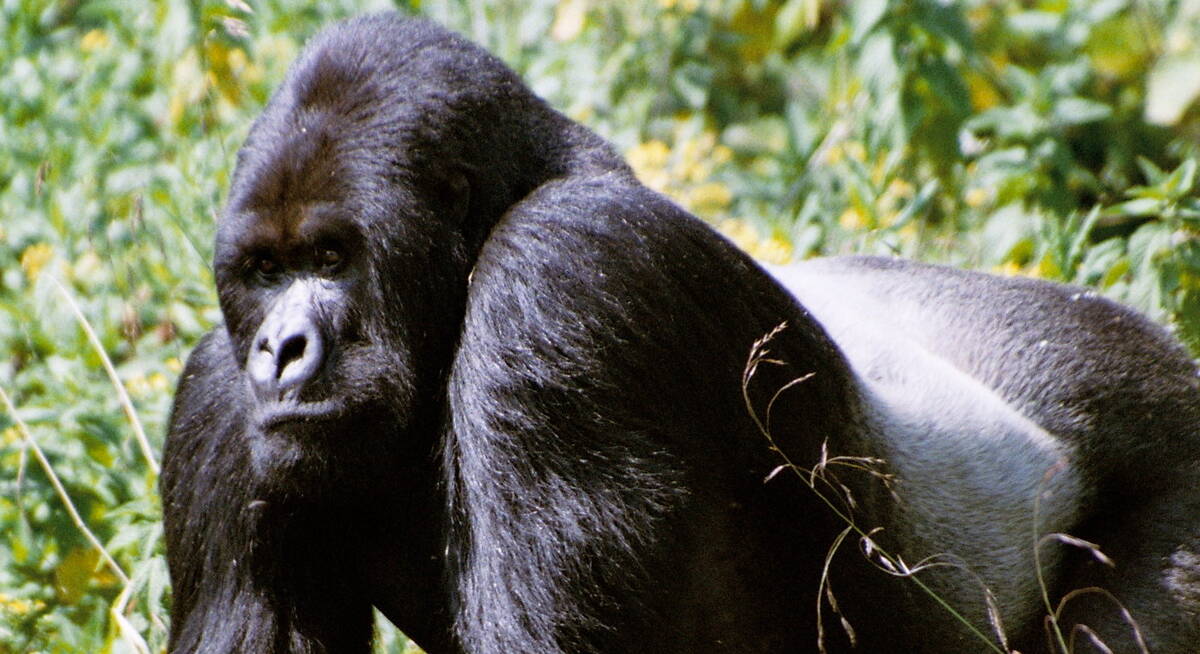
Nothing on earth compares with the experience of meeting a family of mountain gorillas at home in their forest.
The most famous destination in Rwanda, Volcanoes National Park has become synonymous with mountain gorilla trekking and no visit to the country would be complete without visiting these majestic primates.
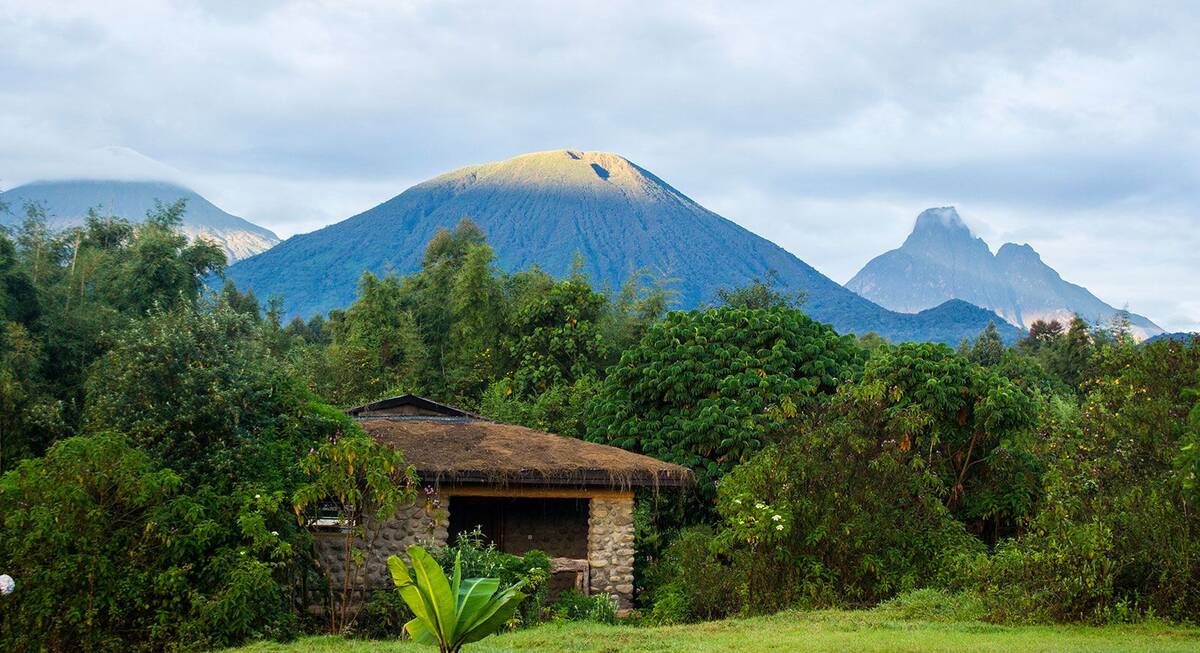
Volcanoes National Park is the Rwandan section of the great volcanic massif called the Virunga Mountains that straddles the borders of Rwanda, Uganda and the DRC. The massif covers a huge area of over 8,000km², encompassing six active and three extinct volcanoes. Gorillas, of course, pay no heed to borders and are known to cross between the countries, although most habituated groups are to be found in Volcanoes National Park. The massif is home to around half of the world's precious mountain gorillas – some 400 of them – making Rwanda probably the best place in Africa for a gorilla trekking safari.
Volcanoes National Park also has a historic connection with gorilla conservation. It was the base for the ground-breaking work of primatologist Dian Fossey which started in the late 1960s and is evocatively portrayed in the book and film Gorillas in the Mist.

Safaris visiting Volcanoes
Just ideas, we'll always tailor-make a trip for you

Gorillas and Serengeti Safari
11 days • 4 locations
KIGALI AIRPORT TO KILIMANJARO AIRPORT
Combine three iconic experiences – mountain gorillas in Rwanda, and the Serengeti plains and awe-inspiring Ngorongoro Crater in Tanzania.
US$14,310 - US$15,540 per person
Gorillas and Maasai Mara Safari
9 days • 3 locations
KIGALI AIRPORT TO NAIROBI AIRPORT
This trip combines two of Africa's most unforgettable wildlife experiences – Rwanda's mountain gorillas and Kenya's Maasai Mara.
US$11,390 - US$13,510 per person

Mountain Gorilla Safari
5 days • 2 locations
KIGALI AIRPORT TO KIGALI AIRPORT
Staying in great-value lodges, with a private driver-guide and 4WD, this adventure includes two treks to get up close with groups of mountain gorillas.
US$6,120 - US$6,120 per person
Golden Monkey Safari
12 days • 5 locations
KIGALI AIRPORT TO KIGALI AIRPORT
Combine four key areas of Rwanda on this excellent-value trip, for a true wildlife and cultural experience. The perfect itinerary for those who want to see all the highlights of Rwanda.
US$11,010 - US$12,170 per person

Silverback Gorilla Safari
4 days • 1 locations
KIGALI AIRPORT TO KIGALI AIRPORT
Fly into Rwanda and you can be trekking to meet a family of mountain gorillas the next morning. An itinerary like this could easily be combined with a safari in Kenya or Tanzania.
US$11,530 - US$14,080 per person
The Highlights of Africa
17 days • 7 locations
CAPE TOWN AIRPORT TO KIGALI AIRPORT
An epic adventure taking in some of Africa’s most incredible sights and wildlife experiences, from Cape Town to the Okavango Delta, Victoria Falls, the Maasai Mara and an encounter with mountain gorillas.
US$16,380 - US$19,790 per person

L'Hoest's Monkey Safari
7 days • 3 locations
KIGALI AIRPORT TO KIGALI AIRPORT
Meet three iconic primates – gorillas, chimps and golden monkeys – and explore Rwanda's fascinating culture on this excellent value privately guided adventure.
US$6,320 - US$6,830 per person

Gorillas and Migration Safari
9 days • 3 locations
KIGALI AIRPORT TO KILIMANJARO AIRPORT
This luxury safari combines two iconic wildlife experiences: trekking to see the mountain gorillas in Rwanda, then flying to the northern Serengeti in search of the wildebeest migration and spectacular river crossings.
US$19,360 - US$25,280 per person
Most recent reviews of our safaris to Volcanoes
Click below to browse all 178 reviews from Volcanoes National Park. All from our travellers; all are in full & unedited.
Where to stay in Volcanoes
Our suggestions for safari camps in Volcanoes National Park

Mountain Gorilla View
With superb views of the volcanoes, the relaxed Mountain Gorilla View Lodge on the slopes of Mount Sabyinyo is well-placed for gorilla trekking.

Sabyinyo Silverback
In a fine location close to Volcanoes National Park, Sabyinyo Silverback Lodge is a very comfortable lodge with wonderful views.

Virunga Lodge
Virunga Lodge is a consciously environmental lodge in a stunning location, about an hour's drive from Volcanoes National Park headquarters.

Gorilla's Nest
Gorilla's Nest is a very high-end lodge in a great location near the Volcanoes National Park headquarters, from where all gorilla trips start.

Bisate Lodge
The exclusive and luxurious Bisate Lodge, close to Volcanoes National Park, is one of the best places to stay in the area.

Bishops House
In the town of Musanze, a half-hour drive from the Volcanoes National Park headquarters, Bishop's House is well placed for gorilla trekking.

Kwitonda Lodge
Close to the edge of Volcanoes National Park, the luxurious Kwitonda Lodge opened in 2019. Ask your Expert Africa specialist for the latest news.

Tiloreza Eco Lodge
Five Volcanoes offers mid-range hotel accommodation around 15 minutes' drive from Volcanoes National Park headquarters.
Our travellers’ wildlife sightings in Volcanoes
This is their success for sightings in Volcanoes National Park. Click on a species for more detail. How we work this out.

100% success

29% success

0% success

0% success

0% success
When to go to Volcanoes National Park
Our month by month guide: What it's like to visit Volcanoes in Rwanda
Jan
Feb
Mar
Apr
May
Jun
Jul
Aug
Sep
Oct
Nov
Dec
Rwanda in January
January falls into the shorter dry season in Rwanda and conditions can be good, however expect some showers during your stay. Christmas and New Year can be a very popular time of year to travel and lodges book up early. The high demand and favourable conditions lead to high prices for the more luxurious lodges.
Travellers spending at least two nights in another of Rwanda’s national parks, in addition to the Volcanoes National Park, can take advantage of lower prices for one gorilla permit. This makes it great-value to do a longer trip to Rwanda, taking time to explore Nyungwe Forest and Akagera National Park. January can be fantastic for birding too, with plenty of migrant species found in the forests.
- Generally good weather although with some rainy spells.
- Popular time of year to travel, particularly around New Year.
- Advance booking advised, particularly for high-end trips.
- Good for birding with migrant species present.
- Special offers are great for exploring the other national parks.
Our view
A very good time to visit
Weather in January
Rwanda in February
As February progresses the likelihood of more rain increases as Rwanda heads towards the heavy rains in March and April. This can still be a good time of year to visit, particularly at the start of the month, and you are a likely to experience a mix of dry days and rainy spells. Your days are likely to be warm, however as with the rest of the year nights can be cold. This is particularly true of the Volcanoes National Park which is at higher altitude.
February can be a good time of year to combine gorilla trekking in Rwanda with seeing the wildebeest migration in Tanzania as the vast herds gather in February on the southern Serengeti plains for the calving season.
- Transitional month, with the chance of rain increasing towards March.
- Warm days and cold nights, particularly in Volcanoes NP.
- High-end lodges are expensive, although demand is lower.
- Migrant birds present with great birding to be had.
- Good time of year to combine with the wildebeest migration.
Our view
A good time to visit, with pros & cons
Weather in February
Rwanda in March
The heavy rains typically start in March, often continuing through to early May. This is generally not a great time to visit Rwanda and conditions are likely to be fairly wet and muddy underfoot. Many people still visit at this time, taking advantage of lower prices at the more luxurious lodges and good availability of gorilla permits. The rain clears the air and it is likely to be far less hazy at this time, making it very good for photography.
The green season can be particularly good for bird watching with many migrant species visiting Rwanda at this time. This can also be a good time of year for chimpanzee trekking, as their food is plentiful in March and troops are not likely to travel as far.
- Heavy rains make gorilla trekking conditions not ideal.
- Lower prices and good availability for gorilla permits.
- Good for bird watching with plenty of migrant species present.
- Typically shorter distances to walk for chimpanzee trekking.
Our view
This is not a great time to visit
Weather in March
Rwanda in April
April is typically one of the wettest months in Rwanda, with an average rainfall of around 150mm. It is still possible to visit during April, however be prepared for heavy rain and muddy conditions in the mountains. April is the low season for high-end lodges and prices can be significantly cheaper at this time.
Comparatively few people choose to visit during April, meaning that it is likely to be fairly quiet and relatively easy to secure gorilla permits. The 7th of April marks ‘Kwibuka’, an annual ceremony which begins three months of remembrance for the victims of the genocide. During this time the whole nation enters a period of reflection, with a number of events being held in commemoration.
- Expect heavy rains throughout the month.
- Few visitors means it is fairly easy to secure gorilla permits.
- It is the green season for luxury lodges, with much lower prices.
- Good time of year for birding.
- Kwibuka remembrance ceremony on 7th April.
Our view
This is not a great time to visit
Weather in April
Rwanda in May
May is often a transitional season in Rwanda, following on from the rains in April. Heavy bursts of rain can be expected at times, however it will often start to dry up as the month progresses. Any rainy spells are likely to last a few hours rather than all day. With the heavy rain earlier in the year it can often remain muddy underfoot when trekking the gorillas and chimpanzees and it’s advisable to wear gaiters.
Following the rains the air can be clear, without any haziness, and this leads to great photographic opportunities at this time of year. For many of the high-end lodges May is classed as the low season, which can make this month great value for money, with fairly good weather and comparatively low prices.
- Weather can be variable, mostly dry with some rainy spells.
- Be prepared for muddy conditions when trekking the gorillas.
- Good air clarity leads to great photographic opportunities.
- Can be good value for money if you’re looking at a high-end trip.
Our view
A good time to visit, with pros & cons
Weather in May
Rwanda in June
The weather in June can be fantastic and this is one of the best times of year to visit Rwanda. This is the start of the main dry season in Rwanda and the rainfall in June typically averages only around 20mm. It is likely to be warm and dry during the day, however the odd rainy shower remains possible. Conditions for gorilla trekking can be very good, although you are still likely to experience mud underfoot in parts.
This is the peak season for the high-end lodges and prices rise significantly. Rwanda is exceptionally popular between June and September and the luxurious lodges regularly fill up well over a year in advance, so we advise planning early.
- Dry weather can lead to excellent conditions for gorilla trekking.
- High-end lodges increase their prices and trips can be costly.
- Very popular time of year, advance booking is strongly recommended.
Our view
Fantastic: the very best time to visit
Weather in June
Rwanda in July
July is a great time of year to visit Rwanda, this is in the middle of the longer dry period and conditions for gorilla trekking can be excellent. Expect long dry days, although always with the off-chance of rain at some point during your stay. As with the rest of the year, temperatures are likely to average around 20-25ºC during the day, though nights can be chilly.
July is a very popular time of year to travel to Rwanda and we advise booking at least 12 months ahead, particularly if you’re looking for a high-end trip. Prices at the top end of the market can be very high in July, however many of the mid-range lodges have the same prices throughout the year, making these options great value at this time.
- Excellent conditions with dry weather for much of the month.
- Very popular time to travel with a limited number of gorilla permits.
- Advance booking is required to for the best choice of accommodation.
- High-end trips can be expensive at this time of year.
- Many mid-range lodges have the same price throughout the year.
Our view
Fantastic: the very best time to visit
Weather in July
Rwanda in August
August is one of the most popular times of year to visit Rwanda. This is the middle of the longer dry season and conditions can be very good. While it can still be muddy underfoot this is unlikely to impact your trek. Our top advice for travel in August is to plan early as many of the more popular lodges will regularly book up well over a year in advance at this time.
Many people visiting Rwanda will choose to combine this with a safari in the Serengeti and August is one of the best months for this. The wildebeest migration is in full swing, with the vast herds being up near the Mara River and river crossings likely.
- Fantastic time to visit with dry weather and great conditions.
- Very popular time to travel, we advise booking early.
- Lodges book up and gorilla permits can be hard to secure.
- Higher prices for the top-end lodges.
- Great time of year to combine with a safari in the Serengeti.
Our view
Fantastic: the very best time to visit
Weather in August
Rwanda in September
The dry season comes to an end in September, with the rains increasing towards the end of the month. For the most part you are likely to experience dry conditions, but be prepared for rainy showers and cold nights. September remains a popular time to travel, especially for those combining the gorillas with the wildebeest migration.
The Kwita Izina festival (the official naming ceremony for all baby gorillas born in the past year) takes place ever year, usually in September. It’s a time of celebration for everyone involved in their conservation. The exact date varies. Chat to us if you’d like to plan your trip around this event.
- Conditions typically good but expect some rain.
- Popular time to travel and early booking is advised.
- Great time of year to combine gorillas and the wildebeest migration.
- The Kwita Izina festival, usually in September, names baby gorillas.
Our view
A very good time to visit
Weather in September
Rwanda in October
The short rains have typically started by October with the month’s rainfall averaging around 110mm. This rain normally falls in short, heavy bursts and you’re likely to have plenty of dry spells too. As with the rest of the year, days can be warm, although nights can be cold, and this is especially true around the Volcanoes National Park where lodges set log fires to keep you warm in the evening.
Lots of people choose to visit Rwanda at this time and prices remain high for the top-end lodges. Booking early is recommended, particularly if you plan to stay at one of the smaller, more exclusive lodges around the Volcanoes park.
- Good time of year to travel although with an increased amount of rain.
- Days are warm however nights can get cold.
- October is popular, particularly for the high-end lodges.
- Prices remain high at the top end of the spectrum.
Our view
A good time to visit, with pros & cons
Weather in October
Rwanda in November
The rains typically continue into November and this can be one of the wetter months of the year. This can still be a good time to travel, as there are still likely to be plenty of dry periods and the gorillas can still be trekked. However, expect quite a bit of mud. The high-end lodges drop their prices in November, making it much more affordable for luxury accommodation.
Between November and April there is also a special offer from the parks authorities, providing a discount on your first gorilla permit if you spend at least two nights in one other national park. This special offer combined with lower prices for luxury lodges makes Rwanda great value for money in November.
- One of the wetter months however gorilla trekking is still possible.
- Far less busy, making it easier to secure gorilla permits.
- Reduced prices for high-end accommodation.
- Special offers to encourage travel to multiple national parks.
Our view
A good time to visit, with pros & cons
Weather in November
Rwanda in December
Rwanda has a second short dry season which typically runs from December to January. Conditions at this time can typically be fairly good, although not as ideal as June – August, and you can still expect rain at this time. Many of the forest tracks can be muddy and nights can be cold.
Many people choose to travel to Rwanda over Christmas and New Year and we advise booking early, particularly if you have preferred lodges in mind. The special offer for a your first gorilla permit at a reduced price remains in place for all travellers spending at least two nights in another park, making Rwanda excellent value for money in December.
- Short dry season, however rain is still possible.
- Conditions for gorilla trekking can be good, but expect mud.
- Cold at night, warm clothes are recommended.
- Very popular over Christmas and New Year, early booking advised.
- Special offers make December good value for money.
Our view
A good time to visit, with pros & cons
Weather in December
Volcanoes National Park: In detail
A guide to Volcanoes National Park
Gorilla tracking safaris in Volcanoes National Park
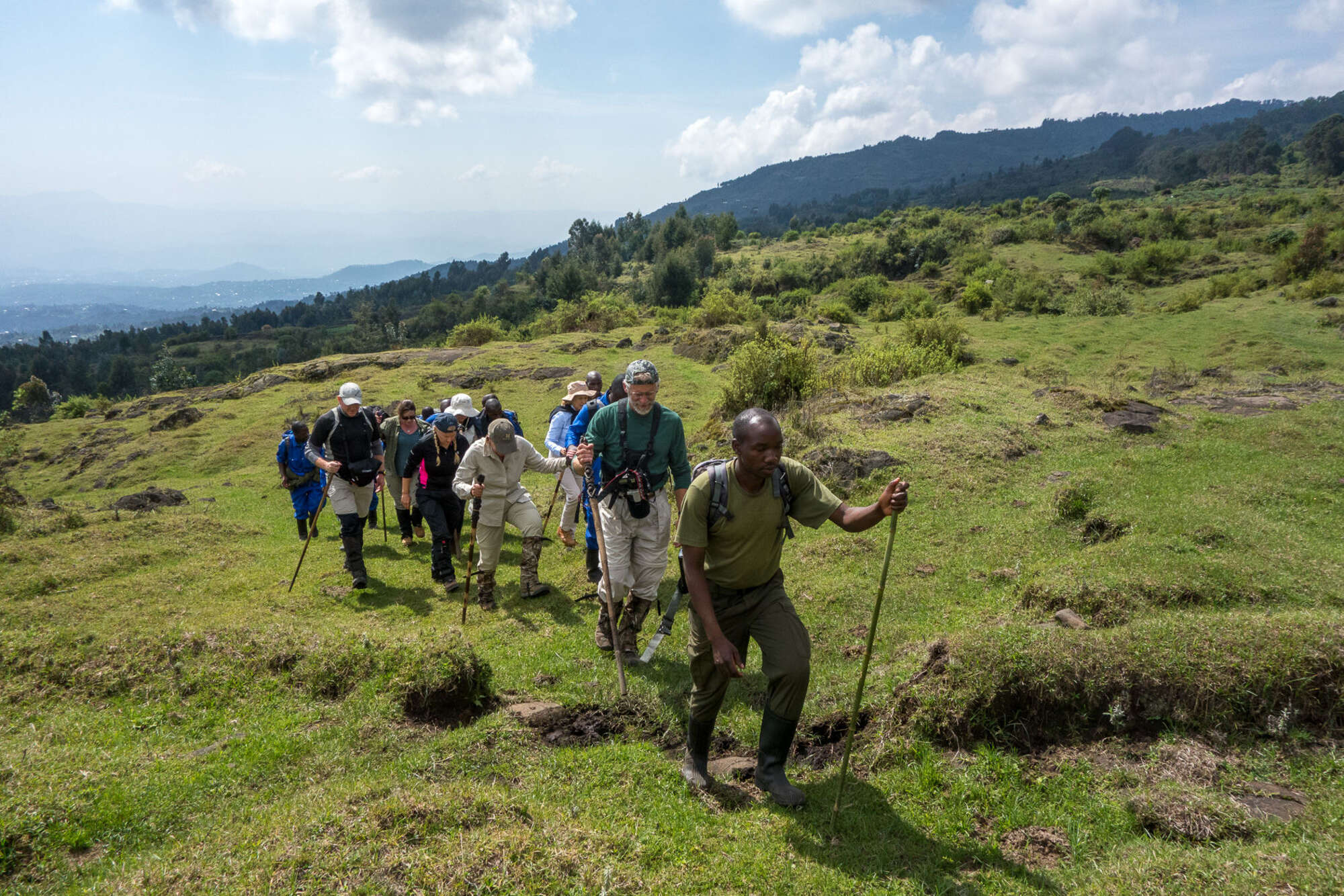
Rwanda is now home to twelve habituated groups of mountain gorillas that are scattered all over Volcanoes National Park. You’ll leave early in the morning for your briefing at the Park HQ and then in parties of eight will be taken to your allocated group with a guide and trackers. Gorilla trekking can be arduous – some of the groups wander high up the mountainsides – but it is always utterly rewarding. Take a look at Gorilla trekking safaris in Rwanda for further information on the experience, etiquette and tips on gorilla trekking. Encounters can never be guaranteed, but any time spent with them will never be forgotten.
Other trips in Volcanoes National Park
One of the more popular routes is to the tomb of Dian Fossey and the Karisoke Research Centre she established, which takes a couple of hours of fairly steep walking. Another beautiful option is a day hike to the crater lake on Mount Bisoke.
Several other primates have made Volcanoes National Park their home too and it’s possible to track two troops of habituated golden monkeys, a totally different experience to gorilla tracking. Golden monkeys tend to inhabit the bamboo forests on the lower slopes, so the walk to reach them is relatively easy. Again, once you find them, you’ll have just an hour in their presence. They’re fast-moving little creatures, and very entertaining as they constantly swing through the bamboo or chase each other in circles all around you. They’re also very pretty, with shiny reddish-gold backs that blend in perfectly with the golden bamboo.
People are as much a part of Volcanoes National Park as its primates and a visit to one of the cultural centres in the area to gain an insight into local life and traditions is not only very interesting but also benefits the local communities and deters them from engaging in negative activities like poaching. Two very good examples are the SACOLA Cultural Centre, with excellent traditional Intore dancing, and Iby’Iwacu Cultural Village, both near Kinigi.
Wildlife of Volcanoes National Park
As well as its infamous mountain gorillas, the park harbours a spectacular array of rare and endangered animals and plants. There is a variety of other primates, including the endemic golden monkeys, plus forest elephants, buffalo, giant forest hogs (Africa's largest swine), bushpigs, bushbucks, black-fronted duikers, spotted hyenas, and around 200 species of birds.
Map of Volcanoes National Park
Choices for where to stay in Volcanoes National Park

Volcanoes National Park: Safaris
Our Rwanda trips usually include private a 4WD and guide, as well as permits to trek for mountain gorillas. Such gorilla safaris usually start early in the morning from the edge of the forest. After training in safety and gorilla etiquette, you will be lead into the forest by a specialist gorilla guide from the national park.
As the altitude is over 2,500m, the pace is unhurried and the hike is tiring, taking from 30 minutes to a few hours. This gorilla guide will take you to one of the groups of habituated mountain gorillas, whom the guides know well. The gorillas are used to human visitors and sightings are pretty much guaranteed.
These well organised and clearly structured gorilla safaris are carried out with small groups of up to eight people, and you will normally be allowed only an hour with the gorillas. Many of Expert Africa's travellers book two or even three treks on consecutive days, so it’s easy to extend your gorilla safari for a few extra days.
Read our trip ideas below and give us a call if you’d like more information.
The Highlights of Africa
17 days • 7 locations
CAPE TOWN AIRPORT TO KIGALI AIRPORT
An epic adventure taking in some of Africa’s most incredible sights and wildlife experiences, from Cape Town to the Okavango Delta, Victoria Falls, the Maasai Mara and an encounter with mountain gorillas.
US$16,380 - US$19,790 per person
Gorillas and Serengeti Safari
11 days • 4 locations
KIGALI AIRPORT TO KILIMANJARO AIRPORT
Combine three iconic experiences – mountain gorillas in Rwanda, and the Serengeti plains and awe-inspiring Ngorongoro Crater in Tanzania.
US$14,310 - US$15,540 per person
Gorillas and Maasai Mara Safari
9 days • 3 locations
KIGALI AIRPORT TO NAIROBI AIRPORT
This trip combines two of Africa's most unforgettable wildlife experiences – Rwanda's mountain gorillas and Kenya's Maasai Mara.
US$11,390 - US$13,510 per person
Mountain Gorilla Safari
5 days • 2 locations
KIGALI AIRPORT TO KIGALI AIRPORT
Staying in great-value lodges, with a private driver-guide and 4WD, this adventure includes two treks to get up close with groups of mountain gorillas.
US$6,120 - US$6,120 per person
L'Hoest's Monkey Safari
7 days • 3 locations
KIGALI AIRPORT TO KIGALI AIRPORT
Meet three iconic primates – gorillas, chimps and golden monkeys – and explore Rwanda's fascinating culture on this excellent value privately guided adventure.
US$6,320 - US$6,830 per person
Golden Monkey Safari
12 days • 5 locations
KIGALI AIRPORT TO KIGALI AIRPORT
Combine four key areas of Rwanda on this excellent-value trip, for a true wildlife and cultural experience. The perfect itinerary for those who want to see all the highlights of Rwanda.
US$11,010 - US$12,170 per person
Silverback Gorilla Safari
4 days • 1 locations
KIGALI AIRPORT TO KIGALI AIRPORT
Fly into Rwanda and you can be trekking to meet a family of mountain gorillas the next morning. An itinerary like this could easily be combined with a safari in Kenya or Tanzania.
US$11,530 - US$14,080 per person
Gorillas and Migration Safari
9 days • 3 locations
KIGALI AIRPORT TO KILIMANJARO AIRPORT
This luxury safari combines two iconic wildlife experiences: trekking to see the mountain gorillas in Rwanda, then flying to the northern Serengeti in search of the wildebeest migration and spectacular river crossings.
US$19,360 - US$25,280 per person

Mona Monkey Safari
9 days • 3 locations
KIGALI AIRPORT TO KIGALI AIRPORT
This example of a luxury holiday explores the wildlife of Nyungwe Forest, the scenic shores of Lake Kivu and the mountain gorillas of Volcanoes National Park, all accompanied by a private guide and vehicle.
US$13,790 - US$19,000 per person
8 of our best lodges around Volcanoes National Park
There is no accommodation inside Volcanoes National Park and overnight visits to the park are not permitted. A number of exceptional lodges catering to high budgets are situated within a few kilometres of the park headquarters. In addition, a small selection of modest lodges is also available.
Mountain Gorilla View
With superb views of the volcanoes, the relaxed Mountain Gorilla View Lodge on the slopes of Mount Sabyinyo is well-placed for gorilla trekking.
Sabyinyo Silverback
In a fine location close to Volcanoes National Park, Sabyinyo Silverback Lodge is a very comfortable lodge with wonderful views.
Virunga Lodge
Virunga Lodge is a consciously environmental lodge in a stunning location, about an hour's drive from Volcanoes National Park headquarters.
Gorilla's Nest
Gorilla's Nest is a very high-end lodge in a great location near the Volcanoes National Park headquarters, from where all gorilla trips start.
Bisate Lodge
The exclusive and luxurious Bisate Lodge, close to Volcanoes National Park, is one of the best places to stay in the area.
Bishops House
In the town of Musanze, a half-hour drive from the Volcanoes National Park headquarters, Bishop's House is well placed for gorilla trekking.
Kwitonda Lodge
Close to the edge of Volcanoes National Park, the luxurious Kwitonda Lodge opened in 2019. Ask your Expert Africa specialist for the latest news.
Tiloreza Eco Lodge
Five Volcanoes offers mid-range hotel accommodation around 15 minutes' drive from Volcanoes National Park headquarters.
Excursions in Volcanoes National Park
Optional, extra day-trips and excursions that are possible while you’re staying in Volcanoes National Park. Talk to us: these excursions are usually best arranged before you go.

Canoeing in Rwanda
Half day - approx. 3 hours on the water
This half-day adventure takes place through lush farmland, on the meandering Mukungwa River near Musanze town. Discovering Rwanda’s countryside in a canoe is great fun: the launch spot is just half an hour from Volcanoes National Park and you'll be guided along the shallow waterway by an expert local canoeist. Your driver-guide from Kigali will operate your transfers and introduce you to your canoe group and guide.
More about Canoeing
Golden Monkey Trekking
Half day; one hour with the monkeys
Spend a morning trekking to find the golden monkeys in the Volcanoes National Park. These endangered monkeys are endemic to the Albertine Rift area and are characterised by their golden-orange fur. You’ll be able to enjoy an hour watching them jump through the bamboo and hunker down to chew bamboo leaves, curiously watching you, as you watch them. Your driver-guide from Kigali will operate your transfers to the park headquarters and introduce you to your trekking group and parks guide.
More about Golden Monkey Trekking
Gorilla Trekking Safari
Half day: one hour with the gorillas
Gorilla trekking in Rwanda’s Volcanoes National Park is a magical experience, transcending any other wildlife encounter we know. Meeting a gorilla family in their forest home, led by a dominant male silverback and a cluster of females and young, is a natural adventure that fully repays the cost in unforgettable memories and images. Your driver-guide from Kigali will operate your transfers to the park headquarters and introduce you to your trekking group and parks guide.
More about Gorilla Trekking
Mount Bisoke Trek
Full day
For something a little different, set out on a one-day hike to the summit of Mt Bisoke in the Volcanoes National Park, home to Rwanda’s famous mountain gorillas. Discover the beautiful scenery of the Virunga Mountains, spot birds and wildlife, and enjoy spectacular views from the crater lake.
More about Mount Bisoke Trek
Mount Karisimbi Trek - 2 day trek
Two days - overnight on Mt Karisimbi
Set out on a two-day hike to the summit of Mount Karisimbi, which at over 4,507m is one of the highest in Africa. This is a challenge for the adventurous! With a local guide, you’ll traverse bamboo forests and rugged terrain, then camp on the slopes of this dormant volcano before enjoying sunrise from the summit.
More about Mount Karisimbi Trek
Trek to Dian Fossey’s Grave
Half day, usually five hours
Dian Fossey is best known for her research and conservation work with the mountain gorillas in Rwanda. She dedicated her life to researching and protecting these ‘gentle giants’ from harm, however she was tragically found murdered at her research camp in 1985. Today visitors can join a local guide to trek through the tropical forest to visit her grave, and learn about the impact of her work.
More about Dian Fossey Trek
Looking for inspiration on where to travel next?
Visit our trip chooser to explore your options and find inspiration for your perfect African adventure
Inspire me