Shiwa Ng'andu: Our full report
Although Shiwa Ng'andu Manor House has become more well known through the best-selling book, The Africa House, ...
... we've been organising trips here for many years. It's an English manor house, set on the Shiwa Ng’andu estate, complete with red-brick gatehouse, clay-tiled roofed workers' cottages, a long approach avenue, formal gardens, a lake, and even its own chapel. The house is an extraordinary testament to the determination of its founder, Sir Stewart Gore-Browne, and is filled with memorabilia and historical records.The Manor House was built in 1925 by Sir Stewart Gore-Brown, following his extensive travels through Africa. After his death in 1967 the Shiwa Ng’andu estate was taken over by his daughter, Lorna, and her husband, John Harvey. Their untimely death in 1992, and lack of funds, led to the house and estate falling into disrepair until it was rescued in 1999 by their son, Charlie, and his wife, Jo. Together they have lovingly restored the house and the estate – including a working farm – to their former grandeur.
The Manor House has five bedrooms, four of them en suite. All are comfortable, but would be in need of some refurbishment if modern standards were the aim. The bathrooms, too, hark back to yesteryear, with plumbing to match! Each of the rooms has a fireplace, which is lit on cold evenings, and is decorated and furnished in period style, with some of the furniture dating back to when Sir Stewart lived in the house. (On our last visit, in April 2011, one of the rooms was being enlarged and updated, and we were told that the others rooms would be done over a period of time, as and when there were sufficient funds to do so.)
In the large, wooden-beamed lounge comfy sofas and armchairs are arranged around a white-painted brick fireplace with tightly packed bookshelves on either side. The sofas and chairs are replicas of the originals, which were damaged beyond repair. Family antiques are dotted around the room, the stone floors are covered with large Persian rugs, and the walls are hung with paintings of various Gore-Brown relatives dating back to the early 19th century.
On a large wooden side table, tea and coffee are available in the morning and afternoon, with freshly baked cake laid out each afternoon. On our first afternoon we had a delicious lemon cake, and on the second there was lovely warm banana bread. We were told that if anything needed refilling, to go to the kitchen and ask: a sign from Jo to make ourselves at home!
Double doors lead out from the lounge onto a covered veranda, flanked by two large arched windows. On the opposite wall are three smaller arched windows looking out to the enclosed courtyard.
Most meals are taken in the dining room which is dominated by a large table. The red-painted cement floors are covered in Persian rugs, and the family crockery is displayed in a cupboard. It’s a very bright room, with three large arched windows framed by floor-to-ceiling red curtains looking out onto the garden. A fire is lit on cold winter evenings, creating a warm and sociable ambience. Meals are laid out on a long sideboard for guests to help themselves, although on warm summer days lunch may also be served in the garden.
Up the stone staircase is the library with polished wood floors covered by rugs, and a couple of sofas. Three walls are lined with bookshelves housing a fascinating range of books collected by Sir Stewart and other members of the family over the years. Doors lead out onto a stone balcony with views over the garden and down a terraced pathway to the old gatehouse. Adjacent to the library is Sir Stewart’s study, which now houses the archives that have been researched and painstakingly put together by Jo Harvey, a trained archaeologist.
The gardens at Shiwa Ng’andu are beautifully maintained with clipped lawns and a long terraced grass avenue leading from the house down to the original gatehouse, complete with a clock tower, and the lake in the distance. Brightly coloured bougainvillea, jacaranda and frangipani make this a colourful oasis in the African bush.
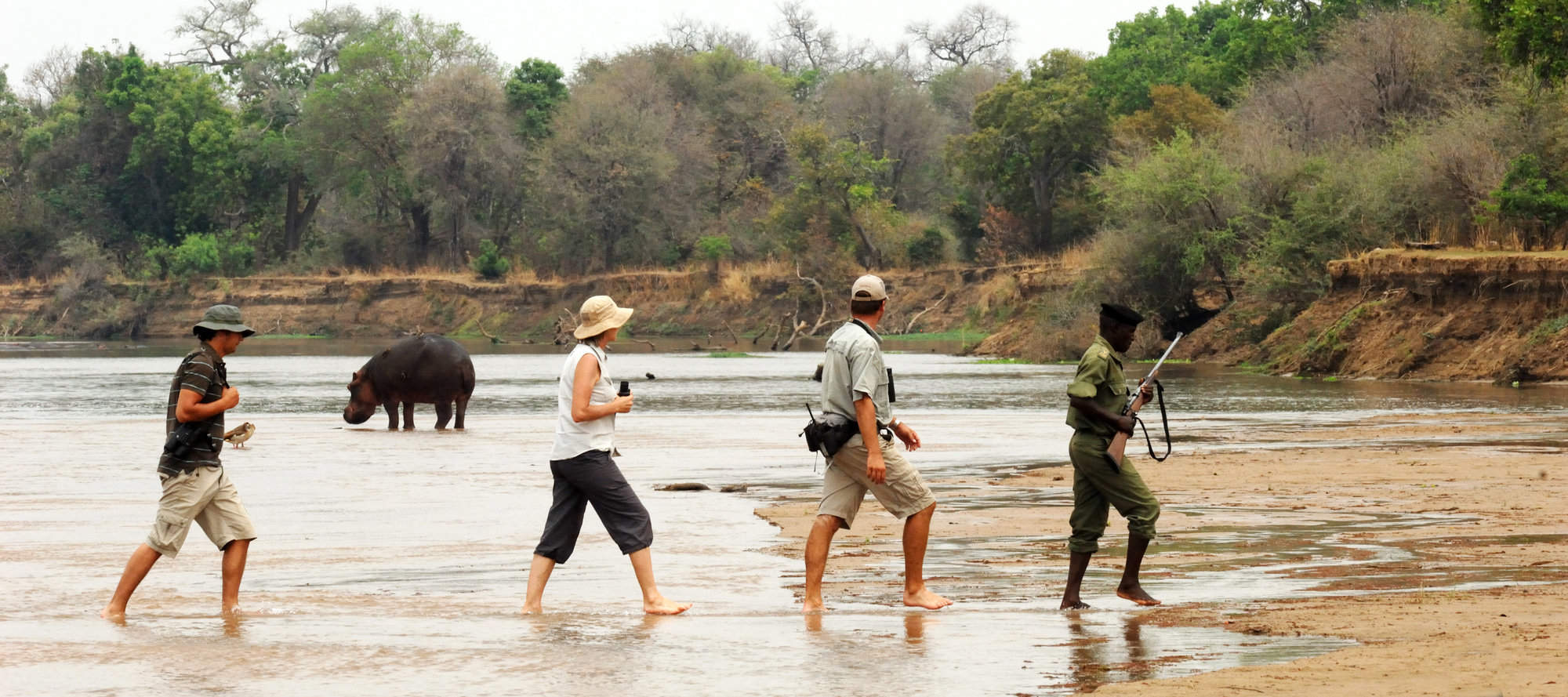
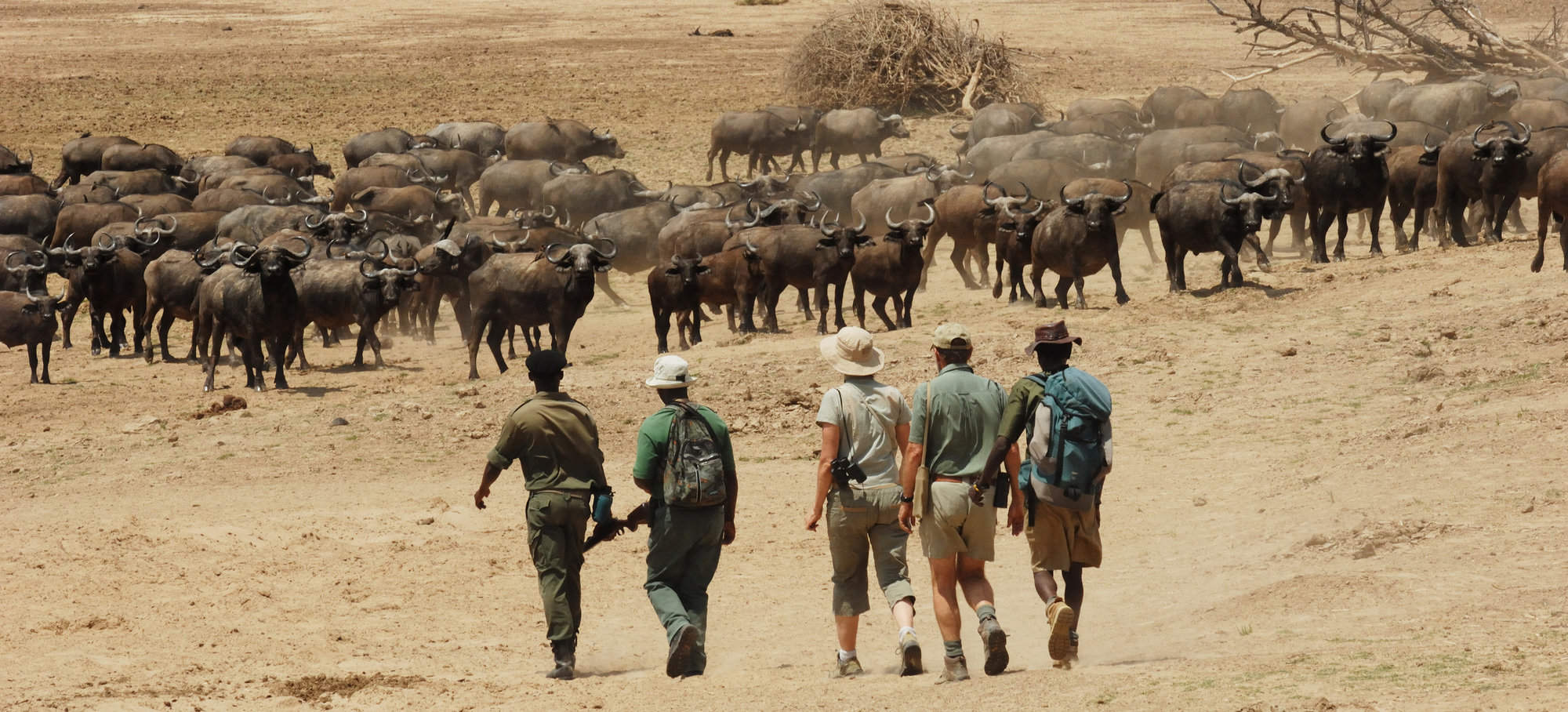
Activities at Shiwa Ng’andu vary. All overnight visitors have complete access to the estate, from the wildlife reserve and the lake to the extensive archives in the house and the day-to-day workings on the farm. Walks around the farm with Jo take in the vast chicken sheds for egg production, and the cattle and pigs that are reared for their milk and meat, or there’s a historical tour of the house, including a look at the archives. There is also a short 20-minute walk up to the family graves at the top of a hill, offering lovely views over the lake. Further afield is a longer walk up Nachipala Hill, which is a bit steep in places and takes about three hours. There are also forest walks along sandy tracks which can be taken unguided – you will be given a map of the various routes.
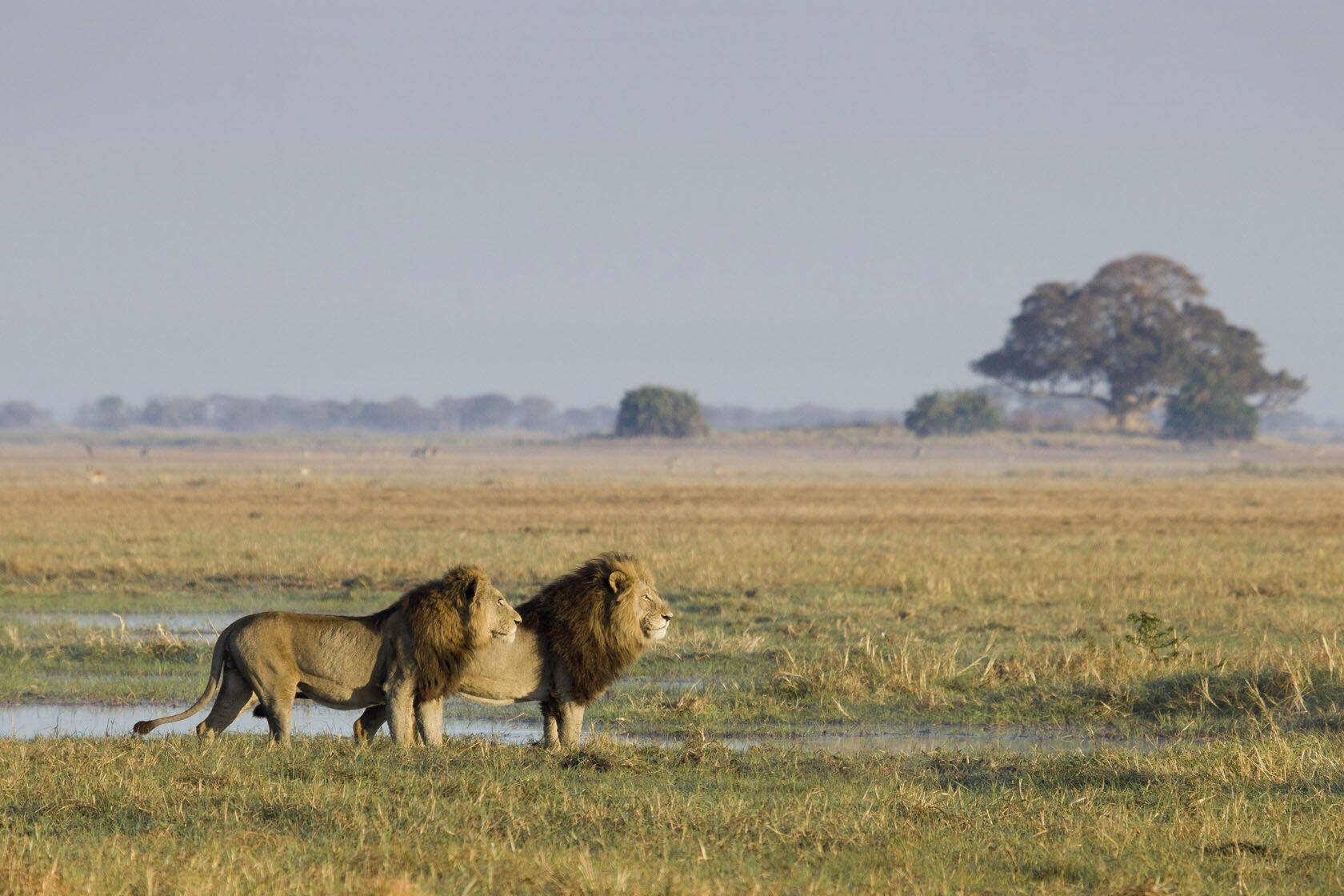
Game drives are available on the Shiwa Ng’andu reserve. It’s possible to see small herds of zebra, sitatunga and blue duiker and the birdlife here is prolific, with over 375 different species ranging from turaco, longclaw, green-headed sunbirds and barbets to vultures and many more.
Boat trips on the lake are guided by Charlie and allow you to see the many resident crocodiles and birdlife as well as amazing sunsets over the hills.
Shiwa has its own stables allowing horse rides of up to one-and-a-half hours for riders with limited riding experience. The cost of these is included for guests staying at the manor house. Longer rides for more experienced riders are available from the stables at Impandala House but these must be booked in advance.
Charlie and Jo Harvey have contributed much to the local community, offering jobs and homes for local people, both on the estate and in the surrounding area. They have rebuilt hospitals and schools and recreated employment for lots of people living in the area who rely on these services. It’s possible for guests at Shiwa to visit some of these community projects, which include the local school, church and clinic.
Our view
Charlie and Jo are wonderful hosts and have done a fantastic job in restoring the manor house and estate at Shiwa Ng’andu, as well as some of the other buildings. They have opened up their home to visitors and have a way of making their guests feel very welcome, yet still manage to continue the day-to-day routine of running the estate. For many visitors, Shiwa Ng’andu is a highlight of their trip.

Zambia expert
Geographics
- Location
- Northern Zambia, Zambia
- Ideal length of stay
- We’d recommend three or four nights here, as there is a lot to do and see in the house and around the estate. Shiwa Ng’andu can easily be visited as a side-trip before or after a safari with any of the camps in the South Luangwa National Park. It also combines well with the camps in the Kasanka National Park, Wasa Lodge and Luwombwa Lodge, as well as Shoebill Island Camp in the Bangweulu Wetlands.
- Directions
- There are scheduled flights with Proflight twice a week to Kasama, from where it’s a 2hr transfer by road . Shiwa has its own airstrip which can be reached by charter plane
- Accessible by
- Fly-and-Transfer
Food & drink
- Usual board basis
- Full Board & Activities
- Food quality
- When a team from Expert Africa visited Shiwa in April 2011 we found the food to be good home-style cooking. Much of the produce is from the Shiwa estate.
For breakfast there was a choice of fresh baked rolls, a selection of cereals, yoghurts and fresh fruit juice, followed by a cooked breakfast of eggs, bacon and sausages.
Lunch was a selection of cold meats, green salad, potato salad, egg salad, coleslaw and egg salad as well as puréed sweetcorn.
Dinner was a very sociable occasion with a starter of celery soup and croutons, followed by roast lamb, baby carrots, gem squash, roast potatoes and sweetcorn. For dessert we had crispy pancakes with cream and orange sauce. - Dining style
- Group Meals
- Dining locations
- Indoor and Outdoor Dining
- Further dining info, including room service
- No
- Drinks included
- All drinks are included except for premium-branded drinks
Special interests
- Family holidays
- Shiwa Ng’andu offers a variety of activities for your family safari holidays in Zambia, e.g. game drives, horse-riding and archeology projects. Children often love the big gardens and farm animals. Expect a matching price tag though!
- See ideas for Family holidays
- Riding holidays
- Shiwa Ng’andu has two stables on the estate. Neither are for novices, though the horses at the main house cater for less-experienced riders who wish to do shorter rides. The stables at Impandala House are operated separately, offering full day rides to the more experienced.
- See ideas for Riding holidays
- Cultural experiences
- Shiwa Ng’andu is a real experience. You’re visiting a real place; it's somebody’s home and a working estate, not just a lodge. Shiwa’s hosts, Charlie and Jo offer an amazing stay, and the chance to get involved in the day to day running of this historical property.
- See ideas for Cultural experiences
Children
- Attitude towards children
- Children of ten years and older are welcome at the Manor House. Children can help on the farm with collecting eggs and milking cows. They can feed the calves, see the piglets and visit the stables.
- Property’s age restrictions
- 10 years
- Special activities & services
- Children can help on the farm with collecting eggs and milking cows. They can feed the calves, see the piglets and visit the stables.
- Equipment
- None
- Generally recommended for children
- Yes – over the age of 10
- Notes
- There are lots of old antiques about, as well as unprotected staircases and uneven floors, so children must be supervised by their parents at all times.
Our travellers’ wildlife sightings from Shiwa Ng'andu
Since mid-2018, many of our travellers who stayed at Shiwa Ng'andu have kindly recorded their wildlife sightings and shared them with us. The results are below. Click an animal to see more, and here to see more on our methodology.

100% success

100% success

100% success

50% success

0% success

0% success

0% success

0% success
Communications
- Communications
- There is internet access available in the office for emergencies. There is usually cellphone reception in some areas outside the house.
- TV & radio
- No – but there is a TV available in the owners’ home for major sporting events.
Health & safety
- Malarial protection recommended
- Yes
- Medical care
- There is a clinic on the estate for minor ailments. The nearest doctor is at the Chilonga Mission Hospital, near Mpika, which is two hours’ drive away.
Shiwa has its own airstrip for emergency medical evacuation. - Dangerous animals
- Moderate Risk
- Security measures
- There are dogs on the property which act as watchdogs.
- Fire safety
- There is a fire extinguisher in the kitchen
Activities

Birdwatching

Boat trip

Cultural excursion

Guided walking safari

Mountain biking
Extras
- Disabled access
- Not Possible
- Laundry facilities
- There is full laundry service which is included in the cost.
- Money
- It is not possible to exchange money at Shiwa Ng'andu.
- Accepted payment on location
- No money is exchanged as everything is included. Tipping is extra and can be in any currency.
Other lodges in Northern Zambia
Alternative places to stay in this same area.

Wasa Lodge
Wasa Lodge offers easy access to Kasanka National Park, best visited in November and December to see the millions of fruit bats that arrive in the area.

Shoebill Island Camp
Shoebill Island Camp stands on the southern edge of the Bangweulu Wetlands. It's a remote spot, and a very simple camp - but if you want to see Shoebills then it is one of the best places in Africa.


Mutinondo Wilderness
Visiting Mutinondo Wilderness near Mpika in northern Zambia - the accommodation, wildlife, birds and animals

Impandala House
Situated in the grounds of the historic Shiwa Ng'andu manor house, Impandala House works well as a base for families or small groups to explore northern Zambia.