Okaukuejo Camp: Our full report
Set in the heart of Etosha National Park, Okaukuejo Resort is a classic restcamp, with a range of accommodation.
With over 100 rooms and a large campsite, it is one of the largest properties we feature. Yet accommodation is not what Okaukuejo is about; travellers stay here for one thing – the wildlife, and particularly the wildlife that visits the superb floodlit waterhole.Okaukuejo Camp (formerly known as Okakwiju), meaning “a woman who bore a child each year”, stands at the western end of the famous Etosha Pan, about a half-hour drive from the Andersson Gate, the southern entrance into Etosha National Park. Although a larger camp than most we feature, it is a popular choice due to its well-established waterhole, which attracts a variety of game in large numbers, especially in the dry season (June to October).
Okaukuejo officially opened for visitors in 1957, and is the oldest and largest of the three former government-run restcamps in Etosha – the other two being Halali Camp and Namutoni Camp. All three camps are operated by the parastatal Namibia Wildlife Resorts.
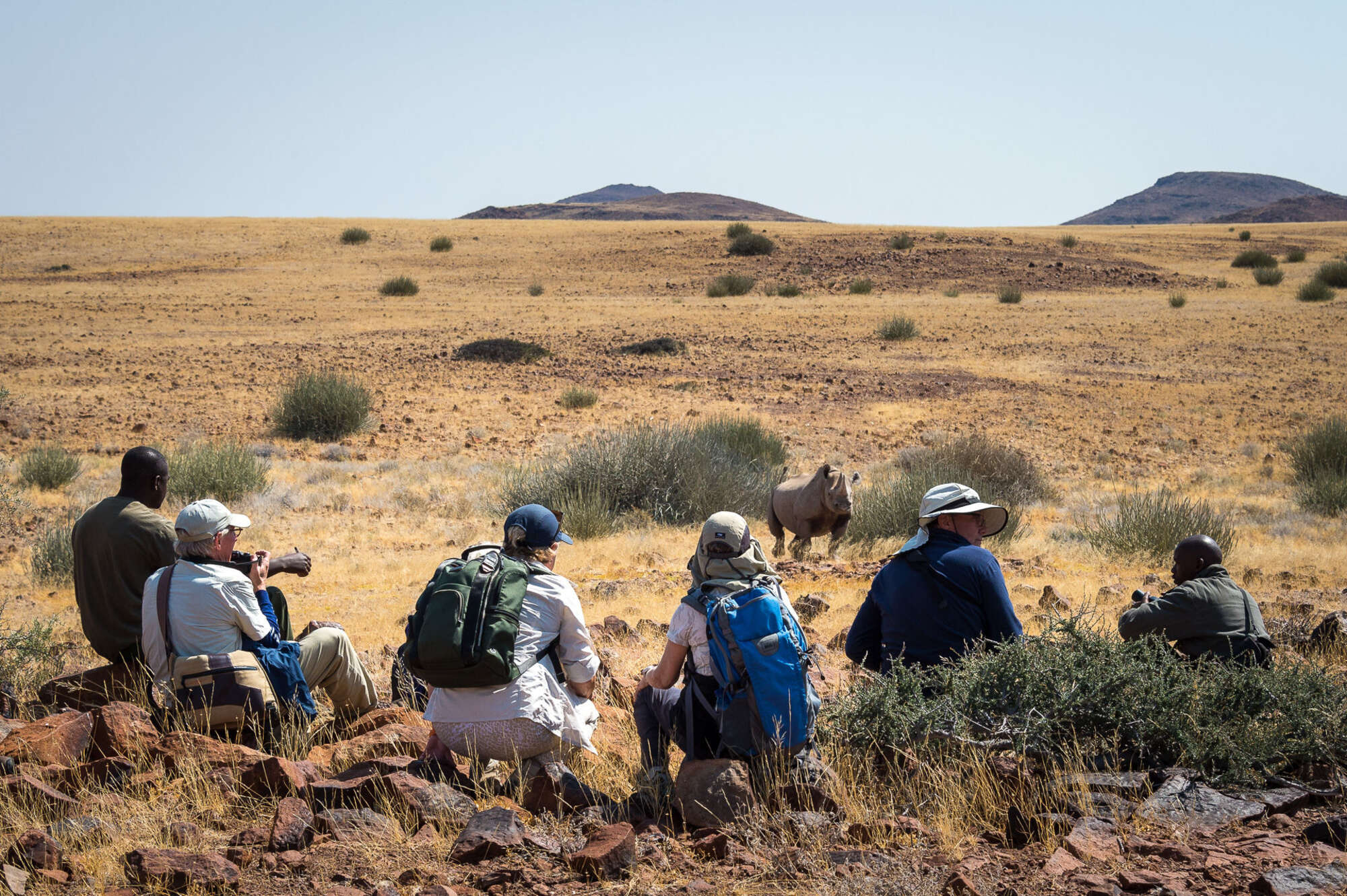
Okaukuejo's main attraction is a large, floodlit waterhole, which receives exceedingly regular visits from a wide diversity of wildlife. This includes herds of antelope, lion, family groups of elephant, and black rhino, which are seen remarkably frequently. It's not an overstatement to say that this is probably the best place in Africa to observe black rhino in the wild.
The spectacle starts at dawn and continues throughout the day, with visits from herds of zebras and springbok during the afternoon. It's especially fun to sit back after dinner with a bottle of wine, watching the water's nocturnal visitors and their interactions. On our last visit in May 2022, we were treated to a magical half hour with three black rhino drinking and bathing in the darkness.
That said, the game viewing at Okaukuejo's waterhole can vary dramatically according to the season and the amount of rainfall received. On some previous visits we've arrived following a few months of good rain and much of the wildlife had moved away to take advantage of the lush grasses covering other areas of the park.
Okaukuejo Camp boasts a total of 102 chalets in five different types, which vary according to location, size and facilities. All are equipped with air conditioning, fridge and tea station, and prices are reasonable.
- Five Premier Waterhole chalets are set in close proximity to the waterhole (chalets 34 & 35 afford the best view). On the ground floor, each of the double-storey buildings has an en-suite bedroom with two single beds, and a small lounge area with a tea/coffee station and fridge. Stairs lead to the main bedroom, where a queen-size bed in the middle of the room faces wide glass doors that open out onto a private patio with twin sunloungers. From here, or from the bed, you have partial views of the waterhole and its wildlife activity. Behind the bedroom area are his and hers washbasins, a flush toilet, a shower and a wardrobe.
- 30 double en-suite Waterhole chalets at Okaukuejo are somewhat misnamed, as only numbers 1w, 2w, 9w and 10w have views of the waterhole. These four are considerably smaller than the rest, however, and do not have a private outside space. Conversely, while the other waterhole chalets have no view of the waterhole, they are situated close by and are considerably more spacious, each with its own private veranda.
- Two Family chalets are very spacious with a large living area with plenty of seating space, two en-suite twin bedrooms and a large kitchenette with a stove (with four hotplates and an oven), a microwave, a large fridge, tea station, cutlery, crockery, pots and pans, kitchen knives, and braai (barbecue) utensils – though note that it is not uncommon to find various pieces of equipment (such as cutlery) missing from the kitchenettes. Each of these chalets has a braai area adjacent to a shaded veranda with outdoor tables and chairs.
- 25 Bush chalets have one large double bedroom, a compact bathroom, and a lounge area. These rooms can be made up into triple rooms with a mattress on the floor for children up to 12 years. Outside there are barbecue facilities and a seating area.
- 40 Double rooms, set in two blocks of 20, are simple but comfortable, with armchairs and a coffee table, a tea and coffee station and an en-suite bathroom, but no private outside space. Two of these rooms, set close to the waterhole, offer disabled access, and have spacious double bedrooms with wide doorways suitable for wheelchair access. The toilet and shower have handrails, and the shower also has a pull-down seat.
Three swimming pools include two large pools and a smaller, shallower pool for children. Okaukuejo also has a tourist shop, selling basic food items (although in our experience this is seldom well-stocked), a curio shop, a post office, a fuel station, and a tourist centre, displaying the ongoing park research.
The camp also features a landmark stone tower which is an excellent spot to relax and watch the sun go down behind the distant mountains.
Etosha National Park is well set up for visitors to drive themselves, with a network of very well-marked and signposted roads. The vast majority of guests at Okaukuejo come in their own vehicles and drive themselves around the park. If you plan to self-drive in the park you will need to collect a park entrance permit at the Andersson Gate and then pay for the park fees at the Okaukeujo Tourist Office. Permits are issued in 24-hour blocks, so you'll need to make sure it covers the length of your stay in the park.
Okaukuejo also offers a range of guided activities in the form of morning and afternoon game drives and night drives. A significant advantage of the morning and night drives is that they allow access to the park before/after the gates are closed to the public, when even those staying within the park are not allowed to drive. The morning drives leave around an hour before the park gates open to the public, and the night drive is entirely after the park closes for the day – so you will have the park to yourself. We enjoyed a particularly fruitful night drive on our last visit including a hyena clan having their kill stolen by a large male lion and numerous black rhino sightings. We have had reports that the guiding from Okaukuejo can be rather hit and miss, but on the last couple of activities we’ve taken here, we have been pleasantly surprised by how knowledgeable our guides have been.
Our view
As a large, formerly government-run camp, Okaukuejo still has rather a resort-like feel and does not reach the same standards as the smaller, private camps outside the park. However, its excellent waterhole, convenient location and economic rates make it well worth consideration.
Country manager: Namibia
Geographics
- Location
- Etosha National Park, Namibia
- Ideal length of stay
- 2-3 nights
- Directions
- Okaukuejo is situated 17km north of Etosha’s Andersson Gate.
- Accessible by
- Self-drive
Food & drink
- Usual board basis
- Bed & Breakfast
- Food quality
- Okaukuejo Camp has a large restaurant, serving breakfast (5.30–9.00am during winter, 6.00–10.00am in summer), lunch (midday–2.00pm), and dinner (6.00–9:00pm in winter, 7.00–10.00pm in summer).
Breakfast is a buffet of cereals, yogurt, breads, cold meats and cheeses, with cooked items including bacon, sausage and beans, and an omelette station where a chef will prepare eggs of your choice. A selection of teas, coffee and fruit juice is also available.
The style of lunch and dinner vary depending on how busy the resort is. On our most recent visit, in May 2022, we didn’t have time for lunch. For dinner we had the choice of a rather limited à la carte menu, incorporating chicken, lamb or beef served with rice or potatoes and boiled vegetables. The dessert options were ice cream or cheesecake. When the camp is busier the à la carte menu is replaced by a buffet.
Regardless of the meal style, we have found that the food here is on the simpler side of things and can often be more than a little reminiscent of school dinners – perhaps unsurprising when you consider the size of the resort. Okaukuejo certainly isn’t somewhere to stay for a high-quality dining experience.
Okaukuejo's Bush chalets have braai (barbecue) facilities and the Family chalets are equipped for self-catering with kitchenettes and individual braai areas. That said, the shop at Okaukuejo is often poorly stocked so we’d warn against expecting to be able to purchase all the ingredients you’ll need for a proper meal. - Dining style
- Individual Tables
- Dining locations
- Indoor and Outdoor Dining
- Drinks included
- No drinks are included. We recommend sticky to bottled water here – this is available from the restaurants, bars and tourist shop.
Special interests
- Family holidays
- Inside Etosha National Park, overlooking a prolific waterhole, the fenced Okaukuejo Camp is a good option on a family safari in Namibia. It's also one of the more economical options in the area, although it can be a little rough around the edges.
- See ideas for Family holidays
- Wildlife safaris
- Okaukuejo Camp's large permanent waterhole can attract vast numbers of animals coming to quench their thirst. Black rhinos, zebras, lions and herds of elephant are frequent visitors in the evenings, and guests have stunning opportunities to observe them at close range.
- See ideas for Wildlife safaris
Children
- Attitude towards children
- Children of all ages are welcome at Okaukuejo Camp, but there are restrictions on activities. That said, most visitors here will do their own drives, in their own cars, and this flexibility is great for families.
- Property’s age restrictions
- Children under the age of six are not permitted on the game drives which are run by the camp.
- Special activities & services
- With three swimming pools, Okaukuejo offers space for children to let off steam.
- Equipment
- None
- Generally recommended for children
- Yes, but children must be supervised at all times. It is especially important that they are quiet at the waterhole.
- Notes
- The presence of dangerous wildlife, and the unfenced swimming pools, mean that parents must keep their children under constant supervision.
Our travellers’ wildlife sightings from Okaukuejo Camp
Since mid-2018, many of our travellers who stayed at Okaukuejo Camp have kindly recorded their wildlife sightings and shared them with us. The results are below. Click an animal to see more, and here to see more on our methodology.

99% success

96% success

96% success

95% success

94% success

90% success

71% success

58% success

43% success

35% success

23% success

20% success

19% success

15% success

6% success

0% success

0% success
Communications
- Power supply notes
- Okaukuejo has a backup generator in case of power cuts.
- Communications
- Cellphone reception is available throughout the camp, and there's a phone in the main area. WiFi is available in the main building for a small fee.
- TV & radio
- There are no radios or TVs in any of the chalets and rooms.
- Water supply
- Borehole
- Water supply notes
- All rooms have hot and cold running water and flush toilets.
Health & safety
- Malarial protection recommended
- Yes
- Medical care
- There's a basic clinic on-site with two nurses. A first-aid box is available at reception. In an emergency, patients are airlifted back to Windhoek.
- Dangerous animals
- High Risk
- Security measures
- There's an electric fence surrounding the camp, to reduce the chances of dangerous animals entering the camp.
- Fire safety
- There is a fire extinguisher in each room.
Activities

4WD Safari

Birdwatching

Night drive
Extras
- Disabled access
- On Request
- Laundry facilities
- Full Laundry Service – Extra Charge
- Money
- There are no safes in any of the rooms at Okaukuejo.
- Accepted payment on location
- Visa and Mastercard are accepted but it is often faster and easier to pay in cash. Payments may be made in Namibian dollars and South African rand.
Other lodges in Etosha National Park
Alternative places to stay in this same area.

Halali Camp
The smallest of Etosha's erstwhile restcamps, overlooking its own floodlit waterhole, Halali has a superb location near the centre of Etosha Pan.

Mushara Bush Camp
The family-friendly Mushara Bush Camp offers great value and is an excellent base from which to explore Etosha National Park.

Ongava Lodge
With fantastic views over a private reserve bordering Etosha, the smart Ongava Lodge offers driving and walking safaris on the reserve, and guided drives in Etosha.

Ongava Tented Camp
Set around a waterhole on a private reserve, the small Ongava Tented Camp combines understated comfort with activities that include walks and night drives.

Onguma Tented Camp
Onguma Tented Camp is a lovely, little tented camp which centres around an attractive waterhole a short drive from the Von Lindequist Gate to eastern Etosha.

Dolomite Camp
Opened in 2011, Dolomite Camp allows visitors access to the far west side of Etosha National Park, which was previously off limits to most visitors.

Mushara Lodge
Close to the eastern entrance to Etosha, the comfortable Mushara Lodge is well-placed for exploring the park in your own vehicle or on a guided drive.

Namutoni Camp
Centred on an old fort, the government run Namutoni Camp is located just inside Etosha National Park, close to Fisher's Pan.

Onguma Bush Camp
For great wildlife viewing without breaking the bank, the affordable and understated luxury of Onguma Bush Camp could be perfect.

Hobatere Lodge
To the west of Etosha National Park, on the edge of Damaraland, Hobatere Lodge offers good game-viewing on its own reserve.

Mushara Outpost
Intimate and luxurious, Mushara Outpost is well-placed on a private reserve to explore nearby Etosha National Park on your own or on a guided drive.

Onguma Camp Kala
For a bird’s eye view across African bush, the stilted rooms at Onguma Camp Kala are truly special.

Onguma The Fort
The Fort is the jewel in the crown of the Onguma lodges, and arguably the whole of eastern Etosha.

Safarihoek Lodge
At the heart of the private Etosha Heights Reserve, Safarihoek Lodge offers comfortable accommodation and excellent game-viewing.

Onguma Forest Camp
From its woodland setting on the Onguma Reserve, Forest Camp is within easy striking distance of Namibia’s flagship national park.

Taleni Etosha Village
Only 4km from Etosha's southern entrance, Taleni Etosha Village is an affordable base from which to explore the park.

Etosha Safari Lodge
A short drive from Etosha National Park's southern entrance, Etosha Safari Lodge is a convenient base from which to explore the park.

Little Ongava
The beautifully located and luxurious Little Ongava is a stunning place to stay in order to explore Etosha National Park and the private Ongava Reserve.

Etosha Safari Camp
Funky, low-key and very original, Etosha Safari Camp is well placed for visiting Etosha National Park on a self-drive or guided safari.

Andersson's at Ongava
With game drives on both its private reserve and in Etosha, Andersson's at Ongava also offers access to the Ongava Research Centre.

Mountain Lodge
In the heart of the private Etosha Heights Reserve, the family-friendly Mountain Lodge offers game drives and bush walks within an exclusive environment.

Mokuti Etosha Lodge
With 106 rooms, child-friendly Mokuti Etosha Lodge is more like a hotel than a lodge. Facilities to include a gym, spa, tennis courts and even a snake park.

Etosha Oberland Lodge
A short drive from Etosha National Park's southern entrance, Etosha Oberland Lodge is a very comfortable base from which to explore the park, with excellent food.

Vreugde Guest Farm
Vreugde Guest Farm is a delightful owner-run and working sheep farm where you can expect a warm welcome and charming hospitality.

Villa Mushara
Offering luxury on a peaceful private reserve close to Etosha, Villa Mushara is a great choice for honeymooners & those wishing to indulge themselves.

Etosha Garden Hotel
Safari in Etosha National Park Namibia, whilst based at the nearby Etosha Garden Lodge.

Etosha King Nehale
A short drive from the national park's northern entrance, Etosha King Nehale Lodge is an interesting and comfortable base from which to explore the park.

Safari House
The private Safari House on the Etosha Heights reserve is a great option families or friends travelling together.


Onkoshi Camp
Onkoshi Camp is owned and run by Namibia Wildlife Resorts. Built on elevated wooden platforms it overlooks Etosha Pan.